

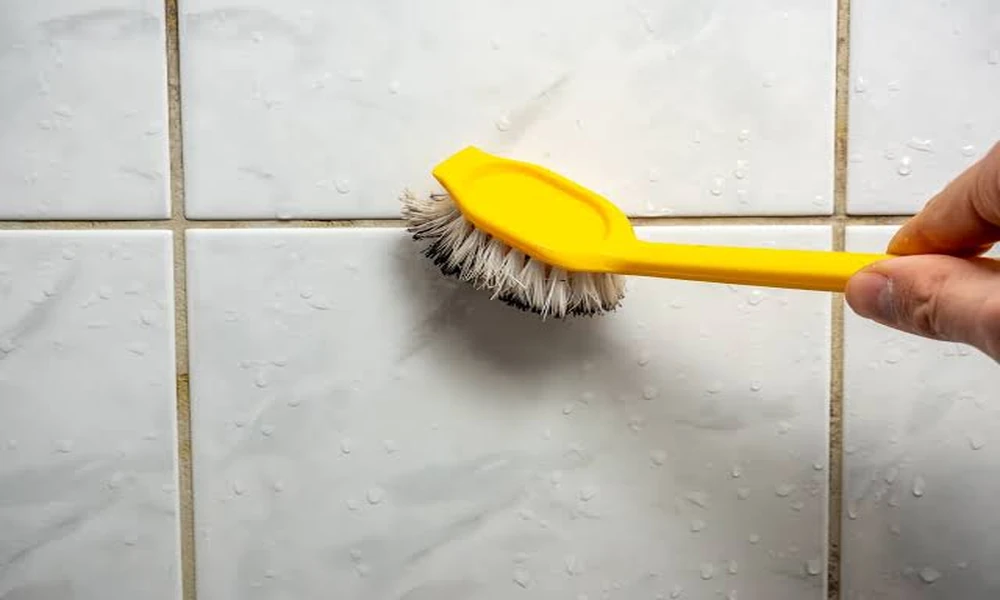
You spend an hour on your knees with a brush, and the grout finally looks the way it did when the tiler left. Then, a few weeks later, it’s grey again. Shower corners go first, then the strip along the base of the bath.
It’s not that you scrubbed badly. Grout soaks things up. Tile has a glaze on it, and grout doesn’t, so water, soap and grime sink in instead of sitting on top. That’s why proper tile and grout cleaning has to end with a seal, or you’re back where you started within a month.
A Bathroom Is Hard on Grout
Think about what those lines go through. They get wet every single day, often twice, and in most Irish bathrooms they don’t dry out properly between showers. Soap settles in. Mould likes the shaded corners. On the floor, every footstep presses a little more dirt into the joints.
So a quick wipe makes the tiles look fine while the grout still looks tired. The stain is inside the material.
Doing the Actual Clean
Nothing about this needs special skill. Wipe the area down first so you’re not grinding loose dirt around. Put a proper tile and grout cleaner on the lines, plus a mould spray wherever you can see black spots, and leave it for a few minutes. Don’t rush that part.
Then scrub along the lines, both directions. The crossing points always hold more muck than the straight runs, so give those a second go. Wear gloves. Rinse with clean water, wipe off what’s left of the cleaner, and if a patch is still discoloured, do it again.
Sealing Is the Bit People Skip
Honestly, this is where most of the benefit is. A grout sealer closes the pores up so moisture can’t get in as easily, and the next clean becomes a five-minute job instead of an afternoon.
It’s tedious on mosaics or hexagonal tiles, since there’s so much grout per square metre. Do it anyway. Deluxe Bathrooms suggests resealing every six to twelve months. If water stops beading on the grout, that’s your sign it’s worn off.
Put the Bleach Down
Everyone reaches for bleach. On grout, it can fade the colour patchily and weaken the material over time, and it doesn’t really deal with the mould underneath. Wire brushes are just as bad. They’ll scratch the tile and can dig grout out of the joint.
A sponge or a firm nylon brush does the job fine. If a guide to tile and grout cleaning tells you to start with bleach, it’s swapping one problem for another.
Keep the Room Drier
Most grout trouble comes back to damp. Leave the extractor fan running after a shower, or crack a window. Run a squeegee down the screen and walls. Pick the towels up off the floor.
None of it is exciting, but it’ll stretch the time between scrubs a lot.
When It’s Past Saving
Sometimes grout is cracked or crumbling, or stained right the way through, and nothing you do will bring it back. That’s a regrouting job, or possibly new tiles. A tiler can tell you which in about two minutes of looking. For everyday dirt, though, clean it, dry it, seal it, and it should hold up for months.