

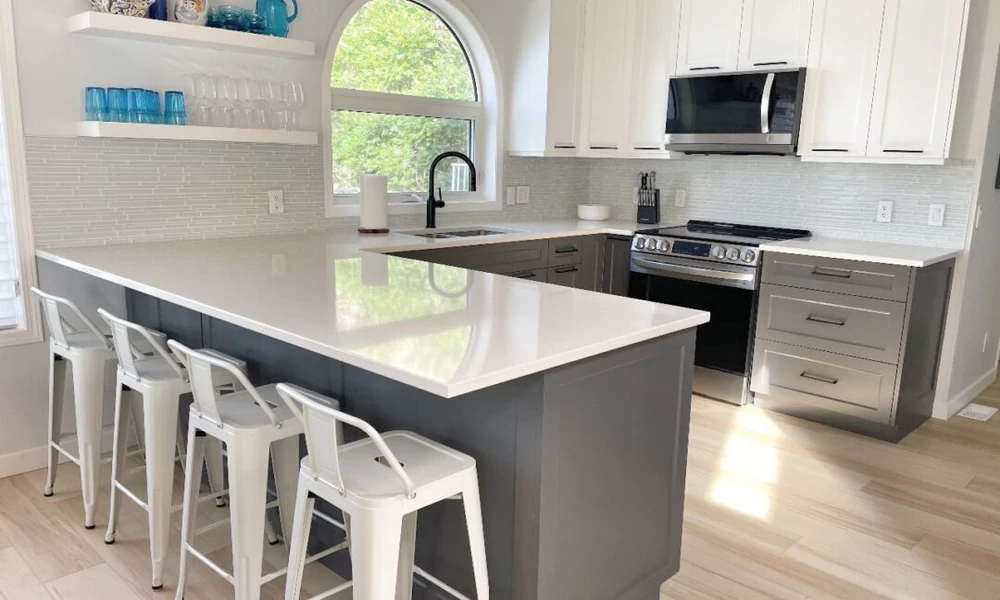
If your kitchen cabinets are starting to look outdated, your first thought might be to replace them entirely. However, that isn’t always the smartest or most cost-effective solution. Many homeowners discover that cabinet resurfacing can dramatically improve the appearance of a kitchen while preserving a large portion of the remodeling budget.
Cabinet resurfacing-often referred to as cabinet refacing-is one of the most popular ways to modernize a kitchen without the expense and disruption of installing brand-new cabinetry. But how do you know whether resurfacing is the right choice for your home?
Below are answers to the questions homeowners ask most often before starting a cabinet renovation.
What Is Cabinet Resurfacing?
Cabinet resurfacing is the process of updating the visible portions of existing cabinets while keeping the original cabinet boxes in place.
A typical project includes:
- Installing new cabinet doors.
- Replacing drawer fronts.
- Covering exposed cabinet frames with matching veneer or laminate.
- Installing new hinges and hardware.
- Adding decorative trim if desired.
Because the cabinet structure remains intact, the kitchen receives a completely refreshed appearance without requiring a full demolition.
How Is Cabinet Resurfacing Different From Cabinet Replacement?
The biggest difference is what stays and what changes.
With cabinet replacement, every cabinet is removed and replaced with a new system. This often requires additional work involving flooring, drywall, plumbing, and electrical systems.
With resurfacing, the existing cabinet boxes remain in place. Only the visible exterior components are updated.
This approach significantly reduces labor, material costs, and construction time.
When Is Cabinet Resurfacing the Best Option?
Cabinet resurfacing works best when:
- Cabinet boxes are structurally sound.
- The existing kitchen layout functions well.
- There is no significant water damage.
- Shelving remains in good condition.
- Homeowners want to improve appearance rather than redesign the space.
If these conditions are met, resurfacing often provides excellent value.
When Should Cabinets Be Replaced Instead?
Complete replacement may be necessary if:
- Cabinets have severe water damage.
- Cabinet boxes are warped or unstable.
- The kitchen layout needs major changes.
- Additional storage is required.
- Existing cabinets were poorly constructed.
In these situations, replacing the cabinets may be the better long-term investment.
Does Cabinet Resurfacing Really Save Money?
In many cases, yes.
Because existing cabinet boxes remain in place, homeowners avoid many of the costs associated with demolition and reconstruction.
Savings often come from:
- Reduced labor.
- Fewer construction materials.
- Less demolition.
- Shorter installation schedules.
- Minimal disruption to daily life.
Instead of paying for completely new cabinetry, homeowners invest in updating the portions that are most visible.
What Materials Are Available?
Modern resurfacing offers numerous design possibilities.
Popular cabinet door materials include:
- Solid wood.
- MDF.
- Wood veneer.
- Laminate.
- Thermofoil.
Each material offers different advantages depending on your budget, maintenance preferences, and desired appearance.
Many homeowners also explore cabinet refinishing options when comparing different ways to restore existing cabinetry. While refinishing changes the color or finish of current cabinet doors, refacing provides an entirely new exterior appearance with replacement doors and drawer fronts.
How Long Does Cabinet Resurfacing Last?
Quality cabinet resurfacing can last many years when installed correctly and properly maintained.
Longevity depends on several factors, including:
- Material quality.
- Professional installation.
- Daily use.
- Cleaning habits.
- Humidity levels.
Routine care typically requires only gentle household cleaners and soft cloths to keep cabinet surfaces looking their best.
Can Cabinet Resurfacing Increase Home Value?
Many real estate professionals agree that kitchens remain one of the most important rooms influencing buyer interest.
Updating outdated cabinets improves:
- First impressions.
- Overall kitchen appearance.
- Perceived home value.
- Marketability.
- Buyer confidence.
Although resurfacing may not provide the same level of structural change as a complete remodel, it often delivers an excellent return on investment for homeowners preparing to sell.
Can I Upgrade Other Features at the Same Time?
Absolutely.
Many homeowners combine cabinet resurfacing with:
- New countertops.
- Tile backsplashes.
- Updated lighting.
- Modern cabinet hardware.
- Fresh interior paint.
- New sinks and faucets.
Completing multiple improvements together creates a more cohesive kitchen while reducing overall project disruption.
How Do I Choose the Right Contractor?
Selecting an experienced remodeling professional is just as important as choosing quality materials.
- Previous cabinet refacing projects.
- Customer reviews.
- Material options.
- Warranty coverage.
- Detailed written estimates.
An experienced installer will also evaluate whether resurfacing is truly the best solution for your kitchen rather than recommending unnecessary work.
Where Can I Find Design Inspiration?
If you’re unsure which cabinet style or finish to choose, reviewing completed remodeling projects is an excellent place to start.
Many homeowners browse california remodels to see how updated cabinetry, modern hardware, countertops, and lighting work together in real homes. Seeing complete kitchen transformations often makes it easier to visualize your own renovation and select finishes that complement your home’s style.
Choosing With Confidence
Every kitchen renovation begins with a decision about where to invest your remodeling budget. If your existing cabinet boxes remain in good condition, cabinet resurfacing offers an opportunity to dramatically improve your kitchen without the expense of replacing every cabinet.
By understanding the differences between resurfacing and replacement, evaluating the condition of your existing cabinetry, and working with experienced professionals, you can confidently choose the solution that delivers the best balance of beauty, functionality, and long-term value.
A thoughtful remodeling decision today can provide years of enjoyment while helping your kitchen remain one of the most inviting spaces in your home.