

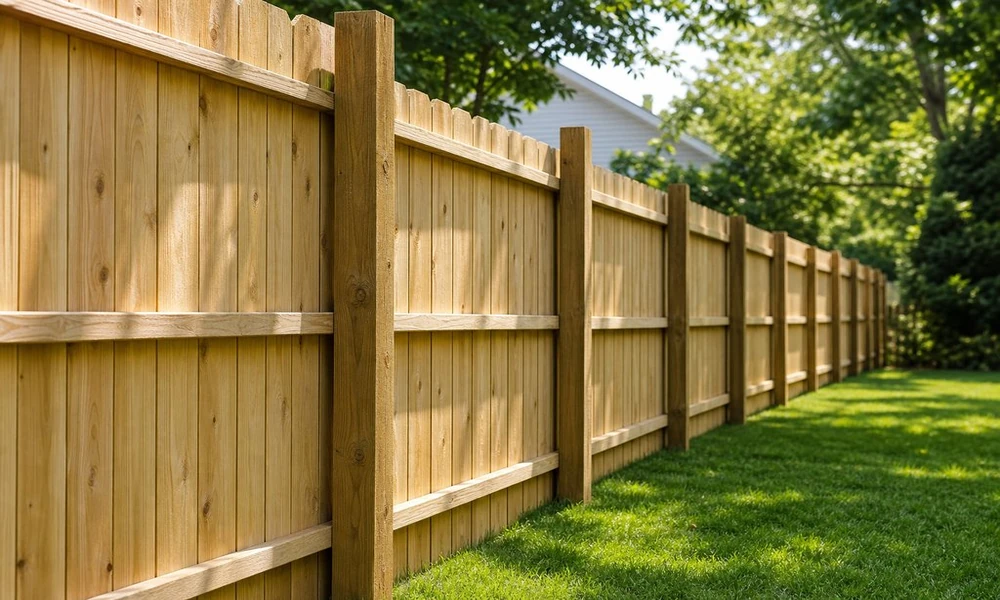
A wood fence can transform the feel of a yard very quickly. It can provide privacy, establish a boundary, secure pets, or just give a yard a finished look. However, the finished boards are only one part of the job. There are a number of factors that affect how well a new fence will hold up and look, and many of these factors come into play long before the day of installation.
What Should the Fence Do?
The height, spacing, and overall construction of a wood fence vary depending on its purpose. Determine the purpose of the fence first before deciding on a style.
If you want a privacy fence (www.en.wikipedia.org/wiki), then you will likely want to use solid panels that are tall, with minimal gaps between the boards. For a more decorative fence, a spaced picket or a shorter rail fence may be a better choice. If you are trying to keep animals inside your yard, you need to consider the gap at the bottom of the fence as well as the security of the gates, not just the visible boards.
Consider some important factors, such as:
- How much privacy do you want?
- Does the fence need to act as a barrier to wind, dogs, or people?
- Where should you place gates for equipment and for general access?
- Is the area you want to fence hilly, or are there trees, utility lines, or drainage issues to consider?
- Do you want the smooth or “finished” side to face outward?
It is possible to have a fence look great on paper but have serious problems once it runs across a hill or into a narrow side yard.
Materials and Structural Foundations
Wood is a warm, adaptable material that has a lot to offer in a fencing project, including a natural look and the ability to be painted, stained, or left unfinished. However, you must consider the type of wood you use and how it is treated if you don’t want your fence to be a maintenance nightmare.
Posts and structural members are typically pressure treated to resist rot and insect damage. Cedar is sometimes used due to its moisture resistance and beauty. Other types of wood may be available based on location, price, and your goals.
New wood may crack or warp slightly as it dries. This is not necessarily a sign of a bad job.
But this can be overkill when the fence is just a short-term, decorative barrier in a non-critical area, and the higher cost of better materials isn’t worth the extra expense.
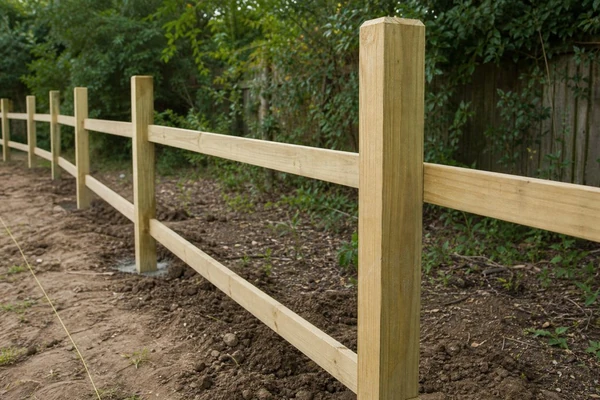
Posts support the rest of the fence, so if they are out of alignment, crooked, or rotting, the rails and boards attached to them will eventually look bad, too – more on fence company if you want that route.
How deep a post needs to be depends on the height of the fence, soil type, climate, and how much abuse the fence is likely to get. Gates require extra strength because of the wear and tear that come from frequent use.
Also, think about how water moves through your yard. Waterlogged posts rot more quickly, and a fence may block the flow of water through a yard. On sloping land, you can have the fence “step down” the slope or follow the contours of the land. Either option changes the way the fence looks and the amount of space underneath the fence.
If a gate needs to go where the ground drops off suddenly, will the gate fit and still swing clear?
Gates and Ongoing Maintenance
Gates are sometimes seen as an afterthought, but they are the most used part of a fence, and they need careful planning. You may need a smaller gate just for walking through, but a wider gate may be needed for lawn care or moving large objects, and you may want extra-wide gates to make future landscaping work easier.
Think about where the gate should open, where the hinges and latches will go, how wide the opening will be, and how easy it will be to walk through. A gate that swings uphill or into a flowerbed or a tight corner may be a big headache later. You may want double gates if you need more clearance, but they will need to line up properly to close securely.
Make sure all hardware is suitable for outdoor use and strong enough for the gate. Many sagging gates happen because of inadequate framing, weak hinges, or posts that aren’t set deeply enough.
Even the best wood fences need regular care. Schedule regular inspections to spot and fix problems like loose hardware, broken boards, mildew, dirt buildup, and gate sagging before they become costly repairs.
Trim vegetation that grows too close to the fence. Keep soil, leaves, and mulch away from the bottom boards. If you plan to stain the fence, wait until the wood reaches the moisture level specified for the stain you’re using.
Planning the Layout
Before you begin any wood fence project, it pays to have a good plan. Think about the size and shape of your fence, the location and width of any gates, and the type of material you’ll use. Draw the proposed fence layout, mark any gate openings, and plan the locations for fence posts before ordering materials.