

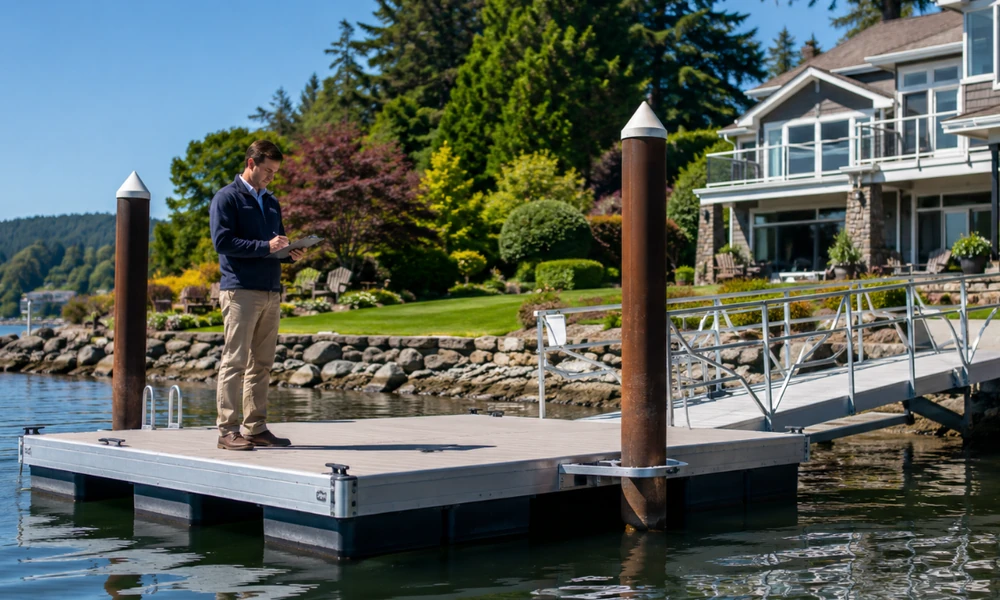
Buying waterfront property can be exciting. You see the water, imagine sitting outside in the evening, and perhaps picture your boat tied up right behind the house. A floating dock can make the property feel even more valuable.
Still, the dock deserves a closer look before you buy.
A floating dock is more than a nice feature. It is a structure that needs maintenance, proper installation, and safe access. Problems with the dock can turn into unexpected expenses after closing. This is why floating dock due diligence should be part of the property review process.
What Should Buyers Check on a Floating Dock?
Start with the general condition of the dock.
Walk across it and pay attention to how it feels. Some movement is normal because the dock floats with the water. But excessive rocking, uneven sections, or areas that feel weak may point to problems.
Look closely at the decking. Wood may show signs of rot, cracks, splinters, or loose boards. Composite materials can also become damaged or worn over time.
Check fasteners, bolts, brackets, cleats, and other hardware too. Rust, corrosion, or loose connections should not be ignored.
The flotation system underneath the dock is just as important. Damaged floats can cause one section of the dock to sit lower than another.
Is the Dock Properly Anchored?
A floating dock needs a reliable anchoring system.
Depending on the location, the dock may use pilings, cables, anchors, or another system that allows it to move with changing water levels while staying in position.
Buyers should look for leaning pilings, loose connections, damaged hardware, or signs that the dock has shifted.
Anchoring problems can become more serious during strong winds, storms, changing tides, or heavy boat traffic. A dock that seems stable on a calm day may behave differently in rough conditions.
Are Permits and Records Available?
This part can be easy to overlook.
A dock may look perfectly normal, but buyers should still ask whether it was properly permitted when required. Local governments and waterfront authorities may have rules covering dock size, placement, environmental impact, setbacks, and construction.
Ask the seller for available permits, repair records, installation documents, or previous inspection reports.
If additions were made later, such as a larger platform, boat lift, electrical service, or new gangway, those improvements may have their own requirements.
Finding out before closing is usually much easier than dealing with questions afterward.
How Do Water Conditions Affect the Dock?
The surrounding water matters almost as much as the dock itself.
Check water depth during different conditions if possible. A dock that works well during high tide may offer limited boat access during low tide.
Consider currents, waves, boat wakes, changing water levels, and storm exposure. These conditions can affect both usability and long-term wear.
If you plan to keep a boat at the property, make sure the dock layout and water depth actually fit the type of boat you expect to use.
It sounds obvious, but it is something buyers sometimes discover too late.
What Maintenance Costs Should Buyers Expect?
Even a well-built floating dock needs regular attention.
Decking may need cleaning or repairs. Hardware can loosen. Metal components can corrode. Floats may eventually need replacement. Gangways, ladders, bumpers, and anchoring systems also wear over time.
Waterfront conditions can speed up this process.
Before buying, try to get a general idea of the dock’s age and recent maintenance history. An older dock is not automatically a bad dock, but it may require more spending in the near future.
Knowing this ahead of time makes budgeting much easier.
Should the Dock Be Professionally Inspected?
When there are questions about structural condition, anchoring, electrical components, or previous repairs, a professional inspection can provide a clearer picture.
An inspection may reveal issues that are difficult to see from above the water.
This is especially useful when the dock is older, has visible damage, or will play an important role in how you use the property.
Final Thoughts
Floating dock due diligence should be part of any serious waterfront real estate purchase.
Look beyond the view and check the dock’s condition, flotation, anchoring, safety features, permits, water access, and maintenance history. Small problems may be manageable. Larger structural or compliance issues can become expensive.
A floating dock can be one of the best features of a waterfront property. Taking time to understand its condition before closing simply helps make sure that feature does not become an unexpected problem later.
This post was written by a professional at Supreme Marine Floating Docks. Supreme Marine Floating Docks is dedicated to providing top-quality floating docks and marine accessories that combine durability, innovation, and superior performance. While we are a new brand, our team brings over 50 years of combined industry experience, making us a trusted name in the marine world. We are passionate about designing and delivering products that meet the highest standards, ensuring reliability and longevity in all marine environments. Whether for residential, commercial, or recreational use, our docks are crafted with precision and care, setting a new benchmark in the industry. At Supreme Marine, we aren’t just floating dock builders Palm Beach -we create lasting solutions.